There's a certain four-letter word that I've using far too much since we moved to Honduras. I use it in traffic. I use it when shopping. I use it when I have to deal with paperwork. I use it on behalf of other people when they run into cultural conflicts. I even use it when I talk about life here with friends and family in the US.
I excuse my use of it because, hey, a lot of the Americans down here use it. Some of them use it a lot more than I do. Then I remember that I'm a pastor and I'm supposed to be an example or something.
Okay. I'm going to tell you what it is. I'm gonna write it out leaving out no letters. Sheild the children's eyes.
Here it is: "they." Sometimes I even say "them."
Yep. They. What's the problem with "they?" "Them?"
There are a couple of problems with these words. Much of the time it is not followed by anything complimentary. It is not as though most of us are saying, "They are so friendly down here" or "They really know how to do x well here." No, we say things like, "They don't know how to drive here!" And, "They have no sense of customer service here!" Sure, I recognize positive cultural features occasionally, but far more often I'm painting Hondurans with a broad and distinctly uncharitable brush.
Even if what I followed "they" with was nice, I think it could still be problematic. "They" divides us into US and THEM. (And far to often that US is us as in U.S. which further complicates the issue.) How can I hope to live, love and serve a people that I regularly categorize as something other than myself?
It seems to me that a significant part of Jesus's ministry and a fair bit of Paul's ink were spent trying to drive home to us that there is no US and THEM, not in the church ("No Jew and Gentile") and not even outside of it ("and such were some of you...").
Do you suppose I'd learn this lesson if I wash my mouth out with soap?
Showing posts with label Culture. Show all posts
Showing posts with label Culture. Show all posts
Sunday, August 24, 2014
@#$%!

Saturday, August 23, 2014
Piñatas and product placement
Having a 6 year old means going to lots of birthday parties. We've (or various percentages of the family) been to several recently and it is interesting to compare the features of different ones. Ellyn's palette of friends is pretty diverse given that her school is populated by people from a variety of embassies as well as local Hondurans. So far we have been to parties hosted by United Statesians, Canadians, and Hondurans.
Today's party was for one of her closer friends from school and neighborhood and had a few of its own distinctive features. It offered us a variety of ways to, let's say, "appreciate" cultural differences.
There was a clown, games, music (not too loud, actually). Both Debbie and Ellyn got roped into games for which they did not understand the rapidly issued instructions.
After the obligatory bludgeoning and dismemberment of a cherished cartoon character (a Lalaloopsy doll in this case) and the concomitant scurry for candy, things proceeded to cake. This was one of the odder moments. The assembled guests--native Spanish speakers to the last one (present family not included)--began to sing "Happy Birthday to you." So what? you say. But they were actually singing it in English, that is heavily accented English. As it turned out, because she hadn't caught what was going on, the only person singing in Spanish--"Feliz cumpleaños a ti!"--was Debbie. It...they...what?!
Then the choir launched into the second verse: "Ya queremos pastel..." which means "Now we want some cake..." Added to the end of this was a brief refrain "Y un Coca-cola." I can only imagine that the people at Coca Cola would be thrilled to find their name so naturally associated with the most oft repeated song in the world.
Friday, May 18, 2012
The new normal

Probably the single greatest "cultural" difference that we have experienced since coming to Honduras (apart from the whole language thing) is the driving culture. If you put a group of ex-pats together the conversation will turn to driving before too long.

There are three possible responses to the realities of driving here:
- Irritation. By far the most popular, this is a poor choice because the sheer number of opportunities for exasperation almost guarantee that your blood pressure will permanently assume an unhealthy level.
- Resignation. Its principal symptom being deep and regular sighs, resignation is slightly better for your health than irritation but not really a long-term solution. Even the Dalai Lama would be brought to wits' end. There are just too many possibilities for unexpected flare-ups for one to maintain a permanent attitude of transportational disinterest.
- Expectation. The hardest to cultivate yet the most rewarding, this response remains open to the limitless possibilities that lie around every corner. Only if you maintain an attitude of expectation can you derive the full joy from driving here. Then you can wring the full delight out of such phrases as:
- "Look! It's a cow walking down the road in the middle of town."
- "Hey! A taxi passing a busito passing a bus! (The Teguz traffic equivalent of turducken.)
- "Nifty! A taxi up on a jack with its tire off in the middle of the intersection."
- "Wow. A car with one tire up in the air because another went into a manhole with no cover."
- "I would have never thought of four cars going through after the light turned red."
Saturday, May 12, 2012
DMV
I have had the "privilege" of dealing with the Department of Motor Vehicles or its equivalent in 4 states and now 1 foreign country. There seems to be some transcultural features of this particular branch of bureaucracy.* Honduras offers its own permutation on the theme.
Because the country has run out of license plates, many cars (ours included) are forced to drive without them. However, one must have permission to drive without a plate so there is a form one must carry with them to establish the legitimacy of their platelessness. Now whether out of shortsightedness or optimism that the necessary plates will soon be produced, the aforementioned certificate of permission to drive without plates is only valid two months at a time. So every two months I have to go to DEI to have someone put a seal and a new date on the back of this form. For DMV type transactions it's fairly painless, but inconvenient to have to do so often.
Well I am due this week to renew but I observed earlier in the week that DEI had abandoned the offices that I was familiar with. (I've been told that the government does not own many or even most of the buildings it uses.) But I did not know where it had moved. Through a fortuitous phone call from a friend who works at the Embassy I learned that it had moved around the corner. I was fortunate enough to find a parking space on the street (the building has about 4) where someone would wash my car and resist stealing my mirrors for a mere $3. Upon entering the new DEI building (a huge improvement on the previous one) I was informed by the guard that the particular section of the department that I needed was no longer housed in the same building as DEI. He kindly offered directions. I don't thrill to taking down directions in Spanish so I tend to quiz the information giver just for my own security that I know what he's talking about.
In the end it was late enough in the day that I didn't think that I had time to make it to this new office before they closed so I will add it to my errands for Monday. The whole thing isn't really that bothersome. The only part about it that galls me a bit is that in their last location, from where I had to wait for my form to be renewed, I could see a room with shelves absolutely filled with license plates.
Can I have one of those?
*The one exception in our experience may be Nebraska. We did interact with plenty of the expressionless DMV type workers there, but had one employee track down a title problem with WI on our behalf, and actually had a few DMV employees casually joke with us while they processed our documents!
Tuesday, May 8, 2012
Have "helmet" will travel
Motorcycles are ubiquitous here. And by ubiquitous I mean really, REALLY annoying. There appear to be no rules governing motorcycle traffic patterns.
There must be rules requiring helmets, however, because virtually all motorcyclists and riders are seen wearing them. The type and use of the helmet seems not to be very regulated because I have seen all of the following serving as motorcycle headgear:
 The standard motorcycle helmet. Many of these are seen to be in less than stellar condition and even more frequent is to see riders with the helmet tipped back on their head so they are not looking through visor but rather under the chin of the helmet.
 The standard bicycle helmet. This is especially common on motorcycle passengers which I just can't figure. First, passengers tend to be children or girlfriends/wives. Wouldn't you want to give them the superior protection? Furthermore, the driver has something to hold on to and is more likely to know when the accident is going to happen. Give him the chintzy helmet! (By the way, a common passenger arrangement is smallest child in front of driver, medium child behind driver, and wife behind that.)
I have also witnessed the following as helmets:


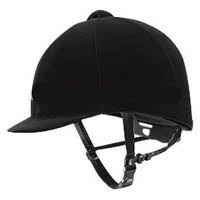
There must be rules requiring helmets, however, because virtually all motorcyclists and riders are seen wearing them. The type and use of the helmet seems not to be very regulated because I have seen all of the following serving as motorcycle headgear:
I have also witnessed the following as helmets:
The Batting Helmet
The Hard Hat
And for the first time today...
The Equestrian Riding Helmet
Sunday, March 18, 2012
Piñata ponderings
Piñatas are extremely popular party items here. Ellyn has been to a couple of parties lately and has taken her whacks as well as enjoyed the resultant candy cascade. At the most recent party we attended (a wonderful affair, thanks for the invite!), the piñata of choice was the disembodied head of Cookie Monster. That was fine up until the point that it was hung on the gallows rope for its whacking. That was a little creepy looking.
But apart from that I still have some reservations about the whole piñata thing.
First, I have seen enough episodes of America's Funniest Home Videos to know that where there is a piñata, invariably somebody's going to get whacked, and it is usually the adults.
Second, I wonder about the long term personal and cultural consequences of the implicit message that if you beat someone enough times with a stick, candy will come out.
Wednesday, March 14, 2012
Denominational Differences
We are an inter-denominational church which means we make an effort to get along and the pastor takes turns offending people in his messages.
But even for us there are limits.
This evening a young boy came to Bible Study dressed in the white uniform of the Real Madrid Futbol Club, something like this:

After study I casually mentioned his attire and commented, "Soy de Barça," indicating my preference for Real Madrid's arch rival, Barcelona. The astonished, wordless, and withering gaze this youngster offered me upon hearing my profession of futbol faith was a sight to behold.
I think I'd get a warmer reception from my Baptist mother if I converted to Hare Krishna.
But even for us there are limits.
This evening a young boy came to Bible Study dressed in the white uniform of the Real Madrid Futbol Club, something like this:
After study I casually mentioned his attire and commented, "Soy de Barça," indicating my preference for Real Madrid's arch rival, Barcelona. The astonished, wordless, and withering gaze this youngster offered me upon hearing my profession of futbol faith was a sight to behold.
I think I'd get a warmer reception from my Baptist mother if I converted to Hare Krishna.
I guess I'm good either way
As far as cultural icons go one slight difference between Honduras and the US is that this...


For the uninitiated, the former is the crest of the Fútbol Club Barcelona or, more crassly the Barcelona soccer team. One hopes the latter needs no similar explanation.
As it turns out, I happen to be a fan of both clubs so the iconographic eclipse of the one by the other is of no great moment to me.
...is a far more common sight than this:
As it turns out, I happen to be a fan of both clubs so the iconographic eclipse of the one by the other is of no great moment to me.
Looking back...a follow up
Lest you were worried after the last post that we might decide to drive indefinitely without side mirrors, I wanted to let you know that I had them replaced yesterday. We have learned several things in this little experience.
1) People steal things that seem to have little value.
2) Driving without mirrors is annoying.
3) Removing the entire mirror from our car is easy and only involves three small bolts.
4) Replacing the mirrors is cheap.
Now, it has only been about 24 hours so I cannot yet testify to the quality of the craftsmanship, but I left the mirror assembly at a shop yesterday morning and picked them up again around noon. The shop custom cut pieces of mirror and glued them onto the mirror adjustment mount so we can still use the motorized mirror adjustment controls in the car.
The charge? 140 lempiras or about $7.00. For both, not apiece. No kidding. I thought it was ridiculously cheap so I gave the guy $10 and told him to keep the change. He looked at me like I was crazy, but said, "Whatever."
So the downside to living in Honduras? You're likely to get your mirrors stolen.
The upside? It only cost $7 to replace them.
Friday, March 9, 2012
A little cultural oddity
Growing up in a church that used the King James Version there were many an archaic phrase that my young mind struggled to understand.
One in particular came to my mind the other day upon observing a cultural oddity here in Honduras. The verse is Psalm 22:7.
I was thinking about this the other day because Hondurans point with their lips. I'm sure that sounds strange but they do, even in the middle of a sentence. In the case in question, a sales lady at an electronics store indicated a stack of inkjet printers in answer to a customer's question by "shoot(ing) out the lip" while speaking. It's the sort of thing that is kind of hard to imagine until you see it.
No, it doesn't have anything to do with Psalm 22, and no, I don't intend to take up the practice.
One in particular came to my mind the other day upon observing a cultural oddity here in Honduras. The verse is Psalm 22:7.
All they that see me laugh me to scorn: they shoot out the lip...That phrase "shoot out the lip" always struck me as odd.
I was thinking about this the other day because Hondurans point with their lips. I'm sure that sounds strange but they do, even in the middle of a sentence. In the case in question, a sales lady at an electronics store indicated a stack of inkjet printers in answer to a customer's question by "shoot(ing) out the lip" while speaking. It's the sort of thing that is kind of hard to imagine until you see it.
No, it doesn't have anything to do with Psalm 22, and no, I don't intend to take up the practice.
Wednesday, February 22, 2012
Little hope for change
No, this post is not about Obama, rather, a specific follow-up to an observation made in an earlier post.
Today I ate lunch out with a friend. Our bill came to about 200 lempiras or $10.00.
Neither of us had much in the way of small bills so I paid with a 500 lempira note, roughly worth $25.
My change, all 300 lempiras of it, came in 10 and 20 lempira notes (13x20, 4x10).
To put this in perspective, I essentially got $15 worth of change in thirteen $1 bills and four 50¢ pieces.
Sunday, February 5, 2012
And, no, it wasn't Taco Loco
Moving to a new country and culture involves a series of "firsts." All those things you don't think twice about in your own country but somehow take on significance when you are somewhere new. For instance, I very soon will have to buy my first pair of shoes in Honduras. I have no idea how this will be similar or different from doing so in the home country but it just seems different. (I'm sure it will be anticlimactic).
As some of you have doubtless already heard, our most recent first was food poisoning. It was horrible. We know where but not what. And no, it wasn't the recently eulogized Taco Loco. Needless to say, our suffering engendered not a small bit of sympathy on the part of both our Honduran and North American brethren and sisteren. Oddly enough, as it is something fairly universally experienced here, it also forges a strange sort of fellowship with one another.
We have decided, however, that this fellowship will NOT be deepened by replicating the experience!
Thanks for your prayers!
Sunday, January 15, 2012
It only sounds like complaining
I know what you're thinking.
"Okay, Steve. You've been funny and informative and even thought-provoking on the blog so far but honestly, haven't you been a bit too positive? I mean, it can't be all peaches-and-cream, right? C'mon, give us the dirt."
Fine. I'll tell you what I don't appreciate so much about life in Honduras.
"Okay, Steve. You've been funny and informative and even thought-provoking on the blog so far but honestly, haven't you been a bit too positive? I mean, it can't be all peaches-and-cream, right? C'mon, give us the dirt."
Fine. I'll tell you what I don't appreciate so much about life in Honduras.
- Tile floors. Some of it can be attractive but most of it is just functional. And I know that there are good reasons for having tile floors here rather than carpet, but that doesn't mean I have to like it. Thankfully it doesn't get too cold so the whole shocking bare feet on the icy tile thing doesn't happen.
- Motorcyclists. They are a lot like mosquitoes. They are buzzing everywhere, they follow no rules, they frequently make you swat (or swerve) at inconvenient moments, and they don't particularly care. If you hit them they make a bigger mess on the front of your car than mosquitoes, though.
- Taxi drivers. Complete disregard for the flow of traffic and all other motorists. If it is an inconvenient place to stop and especially if stopping there is prohibited, that's where they'll stop.
- Bikini Saturdays. Every day the newspaper stands along the road put up an enlarged version of the front page headlines. A fine way to advertise. However, on Saturdays they replace the front page with bikini-clad women. Viva le weekend I guess. (The adds inside the newspapers here tend to be a bit more risque as well).
- Loud music at restaurants. This is epidemic here. Hard to have a conversation. And when I need to hear and understand Spanish I prefer complete silence. No chance.
And I haven't hit one motorcyclist.
Yet.
Saturday, January 7, 2012
Bugs
Either I have an overactive imagination or I saw one too many missionary slide presentations as a child. Brazil was a popular Baptist missions destination during my youth and having at least one picture of a gigantic insect seemed to be compulsory in these presentations. You know, something like this:

And so, as I thought about moving to Honduras I thought, "Semi-tropical climate equals big/lotsa bugs." I wouldn't say that I was worried about this. No one talked about needing mosquito netting in our bedrooms or anything, but I know it was at the back of my mind.
Now, understand, we live in the capitol city of more than 1 million people. I am sure that the insect situation is different/worse in other parts of the country. There's a region of the country called La Mosquitia for crying out loud (though I believe that was named after a people group, not the insect). But our insect experience has been generally positive. We have our windows open all the time and the screens aren't especially bug-tight. We do get insects in the house but they have not been any worse than during the summer in the states. We have cockroaches at the church but they are pretty harmless (thought Ellyn wasn't too impressed when there was one barring her exit from the bathroom). We have seen one scorpion and several common spiders. Termites are common. We occasionally have large (5-6" across) moths in the church. And we have seen a lizard or two scurrying around the church and the house.
So, if you were thinking of visiting but were scared off by images of tarantulas and swarms of dengue bearing mosquitoes, I can lay your fears to rest.
(For the linguistically curious: The Spanish word for fly is mosca making the word mosquito a diminutive--little fly. However, mosquitoes are called zancudos. According to Wikipedia, the region of Honduras and Nicaragua called the Mosquito Coast was named for an indigenous group called the Miskito Indians).
What's for dinner?
One of the questions that comes to our minds when we hear of someone living in another culture is: "What do you eat?" Having seen too many episodes of Survivor and Fear Factor we imagine that people in other places all eat weird, even inedible stuff.
In truth, our eating habits haven't changed all that much. We can find most of the things that we need for the recipes we enjoy. Here's a survey of some of the main categories of comestibles and what is available here.
In truth, our eating habits haven't changed all that much. We can find most of the things that we need for the recipes we enjoy. Here's a survey of some of the main categories of comestibles and what is available here.
- Vegetables. Most of the vegetables that we use on a regular basis are widely available here: potatoes, carrots (gigantic!), onions (red, yellow, white, and scallion), tomatoes (mostly Roma), garlic, broccoli, cauliflower, peppers (a few varieties), cilantro, asparagus, beans, cucumbers, green beans, corn, avocados, lettuce (so-so), cabbage, and even leeks. There are other options in the vegetable department that we have yet to assimilate: cassava, pataste (called chayote elsewhere), and plantains (we've eaten these in restaurants). In particular the avocados (especially the smooth ones) are very nice.
- Fruits. The fruit selection varies more from what we're used to in the states. Bananas, of course, are a staple and believe it or not, far more flavorful than their US counterparts. You can buy them green or yellow. We prefer them in between so we only buy a few at a time. We have also gotten: grapes, apples (red and green), pears, oranges, limes, grapefruit, tangerines, pineapple, and watermelon. The following are either expensive or difficult to find (fresh or frozen): berries in general (except for a generic "mora" of indeterminate origin), peaches, cherries, and cranberries. These absences are offset somewhat by the seasonal availability of mangoes, papaya, guava (2 types), and lychee (though comparing information it seems like what is sold here are actually rambutan).
- Beverages. In hot beverages, of course, coffee is king. It's a bit challenging to find decaf. There are teas available but not much selection. Rosa de Jamaica or hibiscus tea is easy to find. It has a sour, cranberry-like flavor.
In cold beverages other than water and milk, there are packages of fruit juice powder a step or two above Kool-aid that are popular. The top two brands appear to be Zumo and Tang. Horchata, a sweet drink made from rice, is available in many restaurants and from roadside stands.
Not surprisingly Coca-cola and Pepsi products are available, though Diet Coke is called Coca-cola light here. Other sodas are available (a friend recently rejoiced at the arrival of A&W Root Beer to a grocery store here) but the selection is either limited, short term, and/or expensive. A new brand for us is Link. They have banana soda (which doesn't sound appealing to me) and a really good grapefruit one. - Dairy. Milk is available in whole, semi-descremada (like 2%), and descremada (skim or 0.5%). A local university, Zamorano, has quite an extensive and reputable dairy operation. Yogurt is available. Cheese is another matter. Mozzarella is expensive and the Cheddar is not great. We do like quesillo which is a fresh cheese somewhat reminiscent of cheese curd (it squeaks!). Our other cheese favorite is the unremarkably named queso amarillo or "yellow cheese." It reminds me of Edam. Crema is a local product that has the consistency somewhere between yogurt and sour cream. It has a milder flavor than sour cream. It is often put on beans. Eggs are common, though they seem to have a stronger (not necessarily bad) flavor.
- Meat. Meat has been more of a challenge. Most of what we buy we get from PriceSmart the local Sam's Club subsidiary. Though we like our grocery store a lot, the meat section just doesn't speak to us. Or rather, it speaks to us but what it says is not encouraging. Consequently, we eat mostly chicken (purchased in packages similar to those we are familiar with) and ground beef (available in a Sam's club sized tube).
*Well, except that there's no Chipotle here!
Sunday, January 1, 2012
Out with a bang
The principal method for celebrating the New Year here is fireworks. I don't know what, if any, restrictions there may be on them but it doesn't seem to be too many. There was quite a raucous fusillade outside our home last night around 11:30 accompanied by children screaming and running up and down the road in front of the house. At midnight one could hear a nearly incessant sequence of explosions near and far for about 10 solid minutes. Needless to say, sleep was elusive. So the year went out and came in with a bang.
Amazingly, Ellyn slept through the whole ruckus.
Amazingly, Ellyn slept through the whole ruckus.
Saturday, December 31, 2011
Coffee, beans, and culture shock
This morning I was just sitting down to a typical Honduran breakfast--coffee, beans, and crema* (in the beans, not the coffee)--when my daughter approached and asked what I was doing.
"I'm eating breakfast," I replied.
With surprise and a bit of what passes for derision in a three year old she declared:
"But beans aren't for breakfast!"
And I doubt most Honduran children would know what to make of her AppleJacks® either.
* "What is crema?", you may ask. I'm not entirely sure. I know that it is made from milk, has a consistency a bit creamier than sour cream, and that I like the taste far better than sour cream. I would say it is not as tangy as sour cream.
Thursday, December 29, 2011
Colorblind?
Most Hondurans are brown. Like most people groups there is a range of pigment in the population. They are not as dark complected as other Latin Americans, and are darker than others.
I don't bring this up just as a ethnic curiosity. My actual curiosity is in how much of the advertising I encounter here seems oblivious to the ethnic reality choosing instead to portray very Caucasian looking models. And it is not just a matter of North American companies duplicating their ad campaigns here. Even the advertising for exclusively Honduran (or Central American) businesses like my bank tend to use very anglo-american looking models.
My curiosity with this is in part due to the excessive political correctness observed in much American advertising. Who hasn't chuckled at the absolutely improbable groups of fresh-faced ethnically diverse young people gracing the web pages of colleges and universities. (If it is a Christian college, at least one of the young people will be holding a guitar as well.)
But more importantly I wonder about the message that is being sent. Why are white people the standard? To whom are they appealing? Are the advertisers appealing to what they believe is a wide tendency to regard the European/American model as the image of what is desired? Are they trying to create that image? Are they heedless of their audience? Or, if the ads target the rich and the rich have North American tendencies, what messages are being sent to the rest of the people who see these billboards?
I honestly don't know. But it niggles at me.
Saturday, December 24, 2011
Things I don't miss about America
At this point in our sojourn in Honduras (5 months and counting) you might be expecting a reasoned analysis of aspects of life "back home" for which we long wistfully. I might be able to write that post; I haven't given it much thought. I have thought about a few things that I don't miss about "home."
- Politics. Being at a distance helps me control just how much of the political wrangling (all the more pronounced in an election year) I am exposed to. When you're in the states avoiding political talk is a bit like avoiding air. Through TV and the web I get as much as I want and no political TV ads at all!
- Football fans. I don't care about NFL or college football. But I have lived the last 15 years in Wisconsin and then Nebraska, two of the most football crazy places in the country. The problem with football season as opposed to, say, baseball season is that there is far more talk about football than there is actual football. Wisconsin radio stations spend the entire 165 hours between Packer games reviewing, analyzing, anticipating, complaining, and whining. Since we spend a fair bit of our time with North Americans we do have contact with some football fans but not too many. I have never heard a Honduran talk about American Football.
- Car Commercials. There are car commercials on TV here but they seem to be far fewer than in the states. I don't know what it is about car commercials that bothers me but I have long disliked them. Of course, the trade off here seems to be that we have more perfume commercials which I can't say I'm fond of either. That and they seem to cycle the same commercials more often.
- Telemarketers. My Honduran phone line just never rings. Ever. Praise be.
- Junk Mail. For all intents and purposes there is no mail system here. Bills are delivered by hand by an employee of the company sending them. Accordingly, we get no unwanted mail at all. No credit card offers, no insurance offers, no contest entries. Nothing.
Christmas in July

I got to thinking about this this Christmas for a variety of reasons. First, I am sort of a "missionary" now so all those missionary-ish things I remember from my childhood are put in a different perspective. Second, I am grateful that it only takes about 2 weeks for us to get things sent from the states and on top of that, there are constantly people coming and going so it is not that difficult to send or receive goods. Besides, there's not much that I want here that I can't get (perhaps more on that later).
Finally, the main reason that I got thinking about Christmas in July is because, well, to this Wisconsin boy, it's beginning to feel like July at Christmas. We have noticed, however, that in an act of what we regard as selfless solidarity, many of our Northern friends have chosen to celebrate a green Christmas as well.
We love you and hope that you have a joyous season celebrating and anticipating the Advent of our Lord Jesus Christ.
(Note: The poinsettias here are astonishingly plentiful and vibrant. Just one of the many flowers blooming this time of year.)
Subscribe to:
Posts (Atom)